Renovations
The community's second act.
Providence's most interesting real estate story is happening inside its finest first-decade homes.
Providence Guide editorial teamReviewed August 2026
Why renovation is Providence's most active story.
A generation of Providence homes are now twenty to twenty-five years into their lives. The bones are excellent — brick masonry, generous framing, mature landscape — but kitchens, primary suites, and rear elevations were designed for a different way of living. The buyers acquiring these homes today are, in most cases, choosing renovation over relocation. The result has quietly reset the ceiling for the entire community: whole-home reworks that feel less like updates and more like second-generation architecture.
Where renovations matter most.
- Kitchen and pantry reconfigurations for how families actually live
- Primary suite renovations — bathrooms, closets, dressing rooms
- Rear elevations that reset a home's relationship to the golf course
- Outdoor living pavilions, pool renovations, and landscape rework
- Wine cellars, home offices, and multi-purpose lower levels
- Whole-home systems — audio, video, lighting, shades, and network
The kitchen and pantry rework.
The single most impactful renovation at Providence is almost always the kitchen. Original layouts placed the island as an object in a room; today's reworks treat the island as a room of its own — six to twelve feet, seating on both sides, and a full working scullery pantry hidden behind a jib door. Cabinetry moves to inset construction in natural oak or painted poplar, countertops move from polished granite to honed quartzite or soapstone, and appliance packages shift toward integrated refrigeration and range architecture worthy of the room.
The primary suite as a private wing.
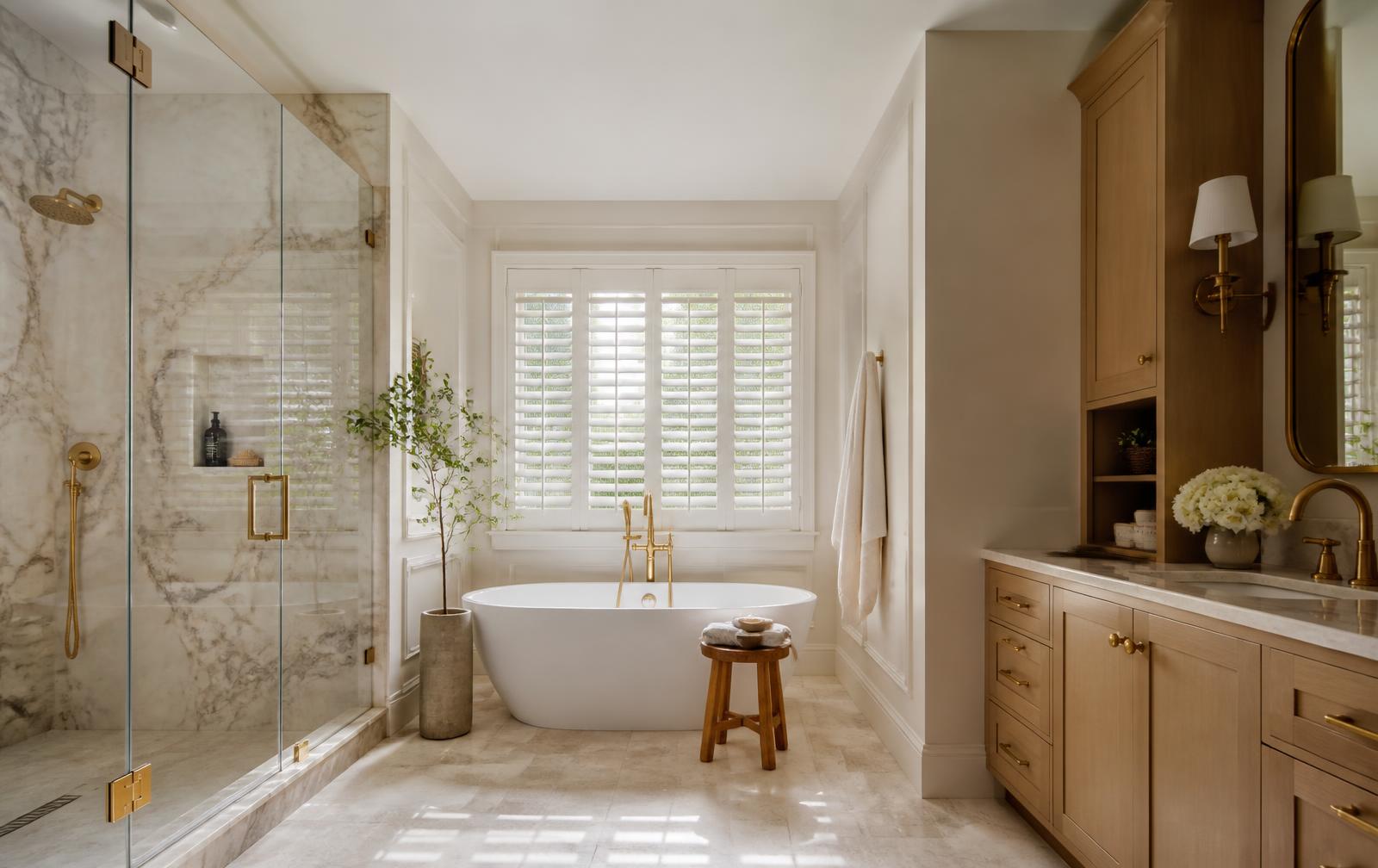
The second high-return renovation is the primary suite. First-decade Providence homes typically deliver a large primary bedroom and a competent primary bath; today's renovation reimagines the sequence as a private wing — bedroom, coffee bar, water closet suite, wet room shower, freestanding tub with a garden view, a dressing room that reads as its own room, and a laundry within the closet rather than down the hall.
The rear elevation.
The renovation with the highest visible impact is the rear elevation. Providence's best fairway and garden lots often carry rear elevations that were value-engineered during the original build; a reworked rear brings symmetry, deeper covered porches, steel-and-glass door assemblies, and outdoor living pavilions that open the home to the landscape it was always meant to belong to.
How to sequence a whole-home renovation.
The most successful Providence renovations begin with architecture and interior design working side by side, then bring the builder in early enough to price and value-engineer the plan before it is finalized. Smart-home infrastructure is designed at the same time — not retrofitted afterward.
- Weeks 1–8: architecture, interior design, and site planning in parallel
- Weeks 8–16: builder onboarded for pricing and value engineering
- Weeks 16–24: permitting, HOA architectural review, and long-lead procurement
- Months 6–18: construction, with a single point of accountability across trades
- Final six weeks: styling, art, and the punch that separates good from finished
Do renovations require HOA approval?+
Interior renovations generally do not; exterior work — additions, elevation changes, roofing, and front-of-home landscape — is subject to architectural review.
Should we move out during a whole-home renovation?+
Most Providence families move out during whole-home renovations. Timelines, dust control, and finish quality all benefit meaningfully.
What is a realistic budget for a whole-home renovation at Providence?+
Meaningful whole-home renovations at Providence typically run from the high six figures into the low seven figures, depending on scope. Kitchen-and-primary reworks with new outdoor living often sit in the middle of that range.
How long will a whole-home renovation take?+
A serious whole-home renovation at Providence generally runs 12–18 months of construction, preceded by 4–8 months of design, procurement, and permitting. Single-room reworks (kitchen, primary bath) are typically 3–5 months on site.
Can we live in the home during a partial renovation?+
For contained scopes — a bathroom, a study, an outdoor pavilion — yes. Anything touching the kitchen, primary suite, or systems generally does not survive family occupancy without meaningful compromise to quality or schedule.